Minecraft has spent more than a decade expanding almost everything except the number of dimensions at the center of the game. That is about to change.
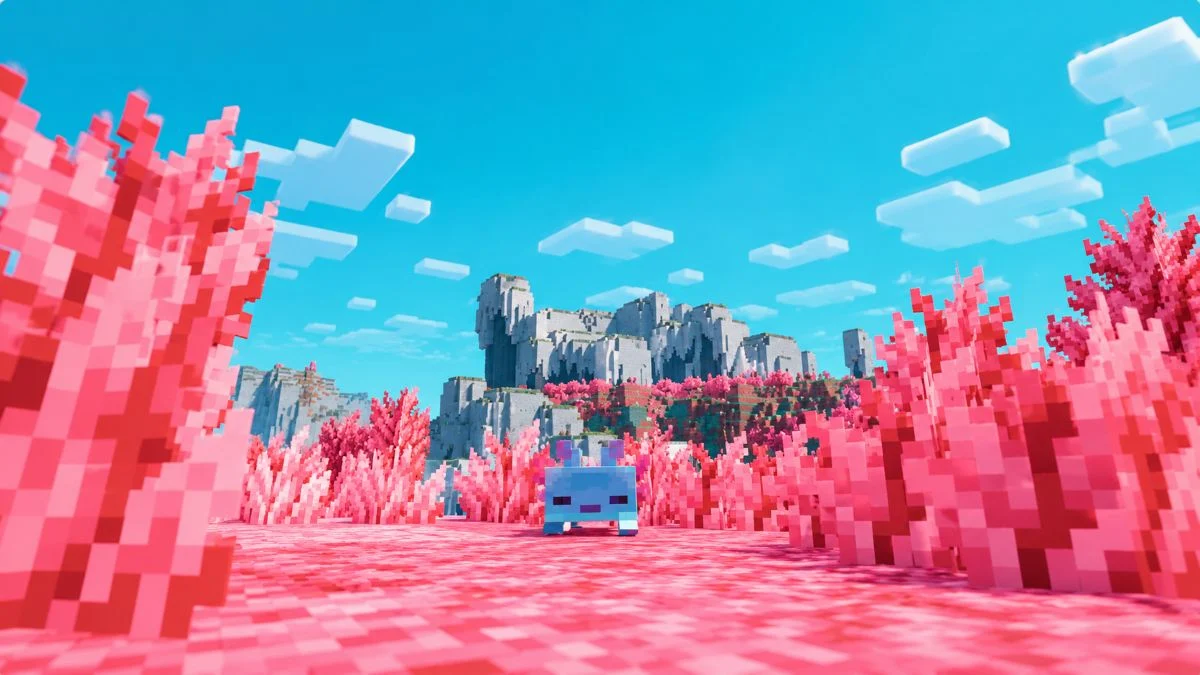
Mojang says the Sift is the first new Minecraft dimension in more than 14 years. Players encounter it first in “Minecraft Dungeons II,” launching September 29, before a version comes to Minecraft Java and Bedrock in 2027. That rollout turns a spinoff into the preview window for one of the biggest structural additions the main game can make.
Dungeons II becomes the first trip through the portal
In the sequel, mysterious rifts open across an interconnected world and transport players into the Sift. Mojang has shown new environments, unfamiliar mobs, hazards and rules that distinguish it from a simple visual reskin.
That makes “Dungeons II” more than a side adventure. It becomes the first place players can learn the visual language of a dimension that will later enter the main Minecraft ecosystem.
For Mojang, that sequencing has an obvious advantage. The studio can introduce the concept in a game designed around combat and directed progression before translating it into the much more open-ended systems of Java and Bedrock.
The 2027 promise is the real earthquake
Minecraft’s Overworld, Nether and End are foundational. Players have spent years learning how those spaces connect, what resources belong to each one and where each dimension fits into progression.
Adding a fourth dimension changes one of the game’s most stable assumptions. It is not comparable to adding a new mob or biome because a dimension can become an entire layer of the game’s geography and economy.
Mojang has deliberately left major questions unanswered, including exactly how players will access the Sift in Java and Bedrock and how closely its systems will resemble the “Dungeons II” version. That uncertainty will fuel months of speculation because even small design choices can affect how players build, explore and progress.
A dimension can support years of expansion
A dimension is not one feature. It can support blocks, enemies, resources, mechanics, structures, music, lore and entire progression systems. More importantly, it gives a game built around exploration somewhere genuinely new to go.
That matters for Minecraft because the game’s longevity creates a paradox. The world is procedurally generated and effectively enormous, but veteran players can still feel as if they understand its rules. A new dimension can make the game unfamiliar again without replacing the parts people already love.
It also creates a long runway for future updates. Mojang does not need to introduce every Sift mechanic at once. The dimension can grow over years the same way the Nether and End evolved after their original introductions.
The spinoff and the main game are becoming one ecosystem
There is another strategic angle to the rollout. By letting “Dungeons II” introduce the Sift first, Mojang gives players of the main game a reason to pay attention to the spinoff while giving spinoff players a reason to stay interested in the 2027 Java and Bedrock update.
Instead of treating each Minecraft product as a disconnected branch, the company can let ideas travel between them. That makes the franchise feel more like one universe with several entry points.
The biggest Minecraft question is suddenly simple
What is on the other side?
That is the kind of question Minecraft has always been best at creating. The game thrives when players feel that another cave, structure or biome might be just beyond what they already know.
“Dungeons II” gets the first trip through the portal on September 29. The rest of Minecraft now has a year to wonder how the Sift will change the main game when the door finally opens in 2027.
TALK YOUR TALK
React, reply and use @username to pull someone into the discussion. Strong takes are welcome; keep it usable.