
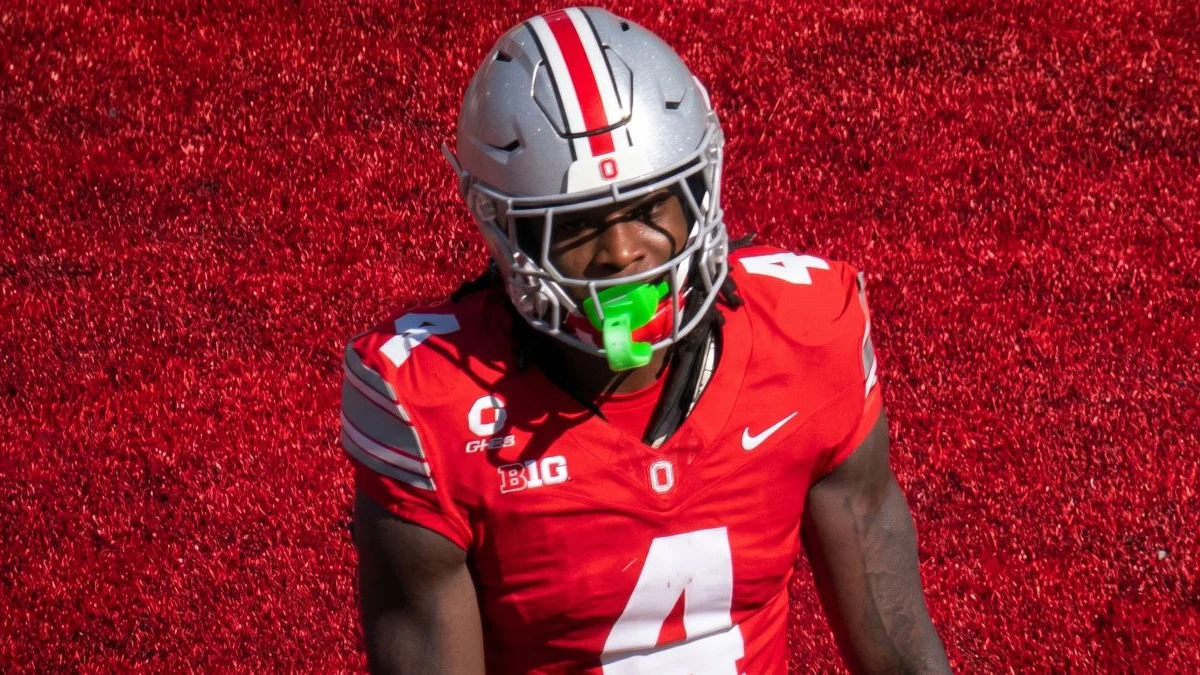
College football produces huge stat lines every weekend. Jeremiah Smith’s game against Illinois felt different because the numbers matched what the highlights looked like: one receiver repeatedly making defenders look helpless.
Smith finished with a career-high 12 catches for 217 yards and four touchdowns in Ohio State’s 42-19 victory. AP noted that the four receiving scores tied a school record. Those are headline numbers on their own, but the performance mattered because it reinforced something defenses already knew: Ohio State has a receiver who can change the geometry of the field.
The touchdowns were not empty box-score production
On a 72-yard score, Smith turned space into a race. On another touchdown, his route left the defender badly turned around before the catch. The highlights showed different kinds of stress, which is what makes an elite receiver difficult to solve.
If a player can only win deep, a defense can alter coverage and force shorter throws. If he only dominates underneath, defenders can crowd the route. Smith’s danger is that the defense has to respect several answers at once.
That combination changes play-calling. If the corner needs help over the top, the offense gets space elsewhere. If the defense leaves the corner isolated, one missed step can become six points.
One Saturday can change the national conversation
College football’s weekly rhythm compresses everything. A performance on Saturday becomes the clip package fans, voters, broadcasters and opposing coaches carry into the next week.
Smith was already one of the sport’s most recognizable players. A 217-yard, four-touchdown performance gives every debate about his place among the country’s best a fresh piece of evidence that is difficult to dismiss as projection or hype.
That is especially true for skill players because awards conversations can become abstract when production is spread across a season. A single explosive game creates a shorthand. People may not remember every target from September, but they remember the afternoon when a receiver looked unguardable.
Ohio State gets the larger benefit
The real value is what the threat does for the whole offense. A receiver who can score from distance, win in traffic and punish isolated coverage forces opponents to choose what they are willing to leave exposed.
Safeties leaning toward Smith can create favorable boxes for the running game. Extra attention on his side can open one-on-one opportunities for another receiver. Even a play where he never touches the ball can be shaped by how much the defense fears him.
That is why explosive receiving performances matter beyond fantasy statistics. The star becomes a structural problem every snap.
Now the film belongs to everyone else
The downside of a breakout game is that every future opponent gets the same evidence. Defensive staffs will study how Illinois aligned, where Smith found leverage and which coverages failed. They will build plans designed specifically to avoid becoming the next highlight reel.
That is the next test for any great player: not whether he can dominate a normal game plan, but whether he can keep producing after the game plan is built around stopping him.
Illinois did not simply lose to a receiver having a good day. It ran into the version of Jeremiah Smith that can distort an entire defensive approach. The rest of college football just got the film, and Ohio State now gets to see how opponents respond.


TALK YOUR TALK
React, reply and use @username to pull someone into the discussion. Strong takes are welcome; keep it usable.