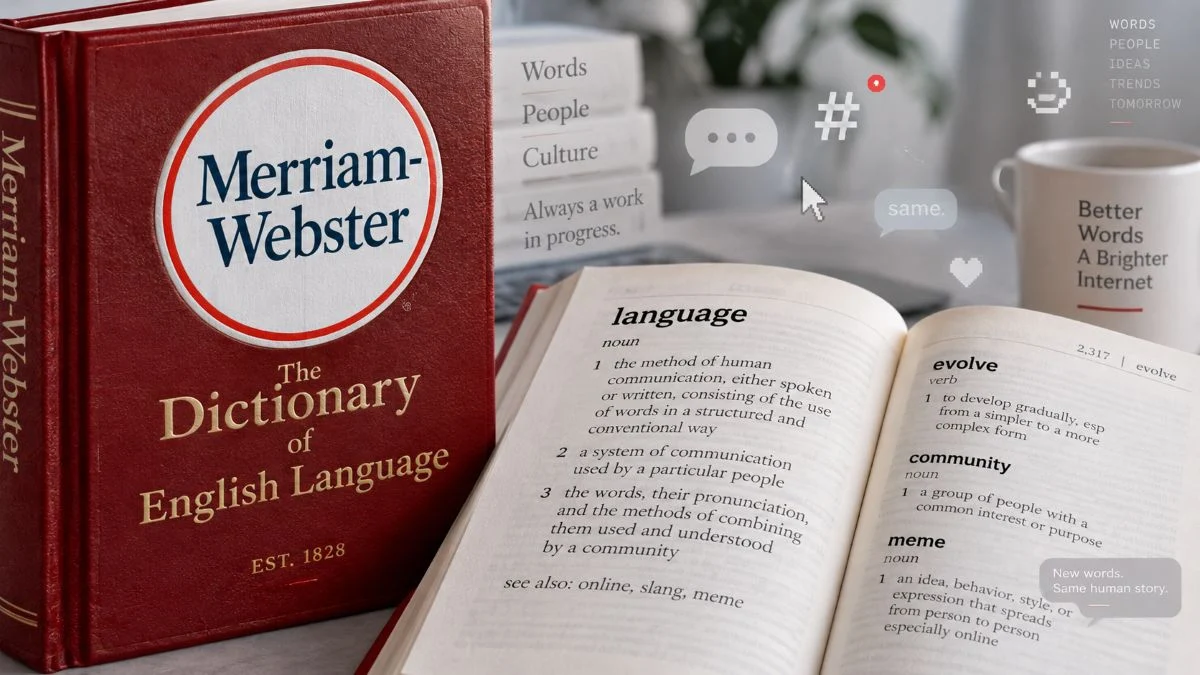
The internet has spent years inventing language faster than institutions can formally acknowledge it. Merriam-Webster just closed some of that gap.
The dictionary announced the addition of 1,400 new words and definitions, and a striking share of the list reads like a snapshot of online life. Looksmaxxing, parasocial, Rickroll and meme coin are now part of the official record, alongside technology terms such as vibe coding, AGI and the increasingly common noun form of compute.
Merriam-Webster said the additions are based on evidence of widespread use over time. That matters because a dictionary entry is not supposed to be an endorsement of a trend. It is evidence that the word has become useful enough, persistent enough and understandable enough to document.
The internet is no longer a side conversation
The more interesting part of the update is what it says about where language is being made. Social platforms, fandoms, investing communities, dating culture and AI circles are no longer fringe sources that occasionally leak into mainstream speech. They are major language factories.
Looksmaxxing is a perfect example. The term grew out of online appearance-optimization culture and then escaped its original communities. The same pattern applies to parasocial, a word that has become shorthand for one-sided relationships people develop with celebrities, creators and public figures. Meme coin came from speculative online finance. Vibe coding arrived with the latest AI programming boom.
The update also includes cuffing season, Sunday scaries, crashout, Mandela Effect, California sober and yacht rock. Put together, the list feels less like a vocabulary lesson and more like a map of the last decade of culture.
A dictionary is becoming an archive of internet history
There is always a delay between a word becoming popular and a major dictionary formally adding it. That delay can make the announcement feel funny to people who have already used a term for years. But that is also the point. Merriam-Webster is not trying to chase every viral phrase before it disappears. It is trying to determine which ones survive.
That makes this particular batch unusually revealing. Words that once sounded hyper-online are now durable enough to need standard definitions for readers who encounter them at work, in news stories, in classrooms and in everyday conversation.
It also means the old boundary between “internet slang” and “real language” keeps getting harder to defend. If millions of people understand a word, use it consistently and carry it from one context to another, the internet has already done the hard work of making it real. The dictionary is simply catching up.
What comes next
The funniest question now is which 2026 terms will look completely ordinary five years from now. AI is creating new vocabulary at a ridiculous pace. So are sports fandoms, gaming communities, finance accounts and short-form video.
Some words will vanish as quickly as they arrived. Others will become so normal that nobody remembers they once sounded ridiculous. Merriam-Webster’s new list is a reminder that the internet does not just move culture. It keeps rewriting the language used to describe it.
TALK YOUR TALK
React, reply and use @username to pull someone into the discussion. Strong takes are welcome; keep it usable.