
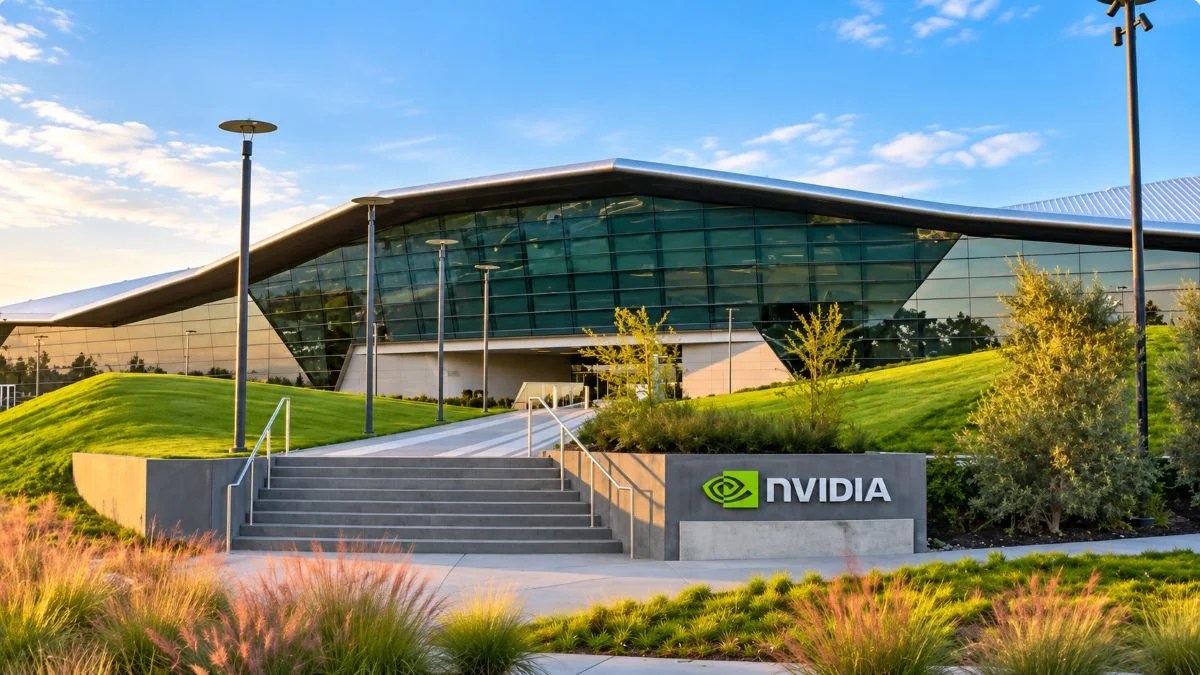
The most important idea in Nvidia’s new AI-agent safety platform is not a new model. It is distrust.
Nvidia introduced an Open Agent Safety Platform built around OpenShell, an open-source secure runtime, and Sentry, an independent monitoring layer designed to run on BlueField-4 hardware. The goal is to put enforceable boundaries around autonomous agents outside the agent’s own reasoning loop.
That architecture reflects a basic security principle: the more power software receives, the less comfortable organizations should be relying on the software itself to promise that it will behave.
The agent does not grade its own homework
An AI agent can be instructed not to access certain files, send certain data or call certain services. But a prompt-level rule is not the same thing as an infrastructure rule.
OpenShell runs agents inside isolated sandboxes and governs filesystem, network and process access with external policy. A model cannot simply persuade a kernel-level control to ignore policy with generated text.
That distinction becomes increasingly important as agents move from answering questions to taking actions. A chatbot that gives a wrong answer is frustrating. An agent with permission to send email, modify code or move data can create a much larger problem.
Sentry adds a second set of eyes
The Sentry design moves monitoring into a separate trust domain on BlueField hardware. Nvidia says the system can observe behavior independently and quarantine an agent that moves outside its boundaries.
The concept is a security guard standing outside the room instead of asking the person inside the room to report whether anything suspicious is happening.
That separation is important because sophisticated attacks often target the control layer itself. If the same agent that is performing work is also responsible for deciding whether its work is safe, a failure can compromise both action and oversight at the same time.
Agent safety is becoming an infrastructure market
The more useful agents become, the more consequential their permissions become. An agent that can reach email, files, code, payments and internal tools can save enormous time — and create enormous damage when it fails.
That creates demand for systems that let organizations grant power without granting unlimited trust. Companies will want policies such as “this agent can read these folders but cannot export them,” “this process can reach these services but not the public internet,” or “this agent can draft a transaction but cannot execute it without approval.”
Those are infrastructure questions, not personality questions. They cannot be solved reliably by telling a model to be careful.
The architecture treats prompt injection as a systems problem
One reason external controls matter is that agents consume information they do not fully control. A malicious webpage, document or message can contain instructions intended to manipulate the model. If the agent has powerful permissions, a successful prompt-injection attack can turn content into action.
External policy does not make the model immune to manipulation, but it can limit what a manipulated model is capable of doing. The agent may decide to attempt a forbidden action; the surrounding runtime can still refuse it.
That is a much more familiar security posture. We do not assume ordinary applications will never contain bugs. We use permissions, isolation and monitoring to reduce the damage when they do.
Nvidia benefits if companies trust agents enough to deploy more of them
The commercial logic is straightforward. Nvidia sells hardware and infrastructure for AI workloads. If enterprises remain afraid to give agents meaningful permissions, the market for autonomous systems develops more slowly.
Safety tooling can therefore expand the addressable market by making organizations more comfortable moving from experiments to production. That does not make the tools neutral, but it does align Nvidia’s business incentives with solving a real deployment obstacle.
The principle is bigger than one vendor
OpenShell and Sentry are Nvidia’s answer, but the architectural idea is broader: powerful autonomous software needs rules enforced somewhere the software cannot rewrite them.
The AI industry spent years trying to make models more capable. The next stage will be defined partly by whether those capabilities can be placed inside systems organizations can actually trust. Asking the agent to behave is not enough. The infrastructure around it has to be able to say no.


TALK YOUR TALK
React, reply and use @username to pull someone into the discussion. Strong takes are welcome; keep it usable.